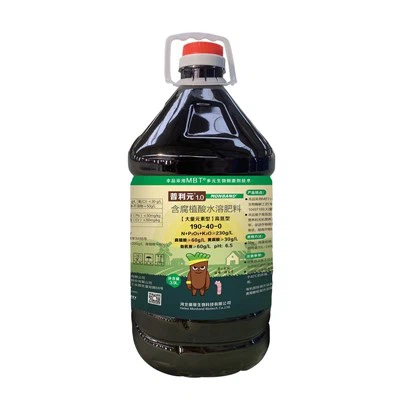
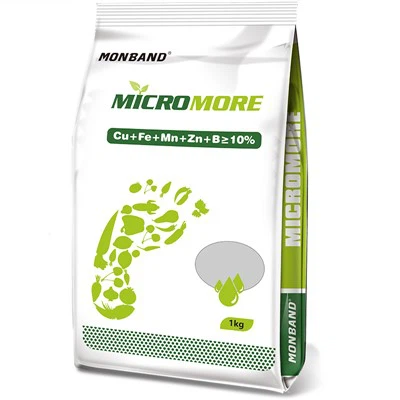
As a supplier of Humic Liquid Fertilizer, I often encounter questions from farmers, gardeners, and agricultural enthusiasts about the differences between Humic Liquid Fertilizer and solid humic fertilizer. In this blog post, I'll delve into the key distinctions between these two types of fertilizers, exploring their characteristics, advantages, and applications to help you make an informed decision for your agricultural needs.
Physical Form and Composition
The most obvious difference between Humic Liquid Fertilizer and solid humic fertilizer lies in their physical states. Humic Liquid Fertilizer, as the name suggests, is in a liquid form. It is typically a solution or suspension that contains humic substances, which are organic compounds derived from the decomposition of plant and animal matter. These humic substances include humic acid, fulvic acid, and humin, each with unique chemical properties and benefits for soil and plants.
On the other hand, solid humic fertilizer comes in a dry, granular, or powder form. It is made by extracting and processing humic substances from natural sources such as leonardite, lignite, or peat moss and then drying them into a solid product. Solid humic fertilizers may also contain other ingredients such as nutrients, minerals, or beneficial microorganisms, depending on the specific formulation.
Nutrient Availability and Absorption
One of the significant advantages of Humic Liquid Fertilizer is its high nutrient availability and rapid absorption by plants. In liquid form, the humic substances and nutrients are already in a dissolved state, making them easily accessible to plant roots. This allows for quick uptake and utilization by plants, resulting in faster growth, improved nutrient efficiency, and enhanced crop yields.
Liquid fertilizers can be applied directly to the soil or through foliar spraying, which means they can be absorbed through both the roots and the leaves. Foliar application is particularly beneficial when plants need a quick nutrient boost or when soil conditions limit nutrient uptake. The liquid form also allows for better mixing with other fertilizers or pesticides, enabling a more comprehensive approach to plant nutrition and pest management.
In contrast, solid humic fertilizers need to be broken down and dissolved in the soil before the nutrients can be released and absorbed by plants. This process can take some time, especially in cold or dry conditions, and may result in a slower release of nutrients compared to liquid fertilizers. However, solid fertilizers can provide a more long-term supply of nutrients, as they gradually break down over time, ensuring a steady source of nutrition for plants throughout the growing season.
Application Methods and Flexibility
Humic Liquid Fertilizer offers greater flexibility in terms of application methods. It can be applied using various techniques, including drip irrigation, sprinkler systems, fertigation, or foliar spraying. This versatility makes it suitable for different types of crops, soil conditions, and farming practices. For example, in large-scale agricultural operations, fertigation is a popular method of applying liquid fertilizers, as it allows for precise control of the amount and timing of nutrient delivery.
Liquid fertilizers are also easier to handle and store compared to solid fertilizers. They can be easily transported in containers and mixed with water or other solutions as needed. This makes them a convenient option for small-scale farmers, gardeners, and greenhouse growers who may not have the equipment or space to handle large quantities of solid fertilizers.
Solid humic fertilizers, on the other hand, are typically applied by broadcasting or incorporating them into the soil before planting. This method is more suitable for large areas of land and can be effective in improving soil structure and fertility over the long term. However, it may require additional equipment and labor for proper application, and the distribution of the fertilizer may not be as uniform as with liquid fertilizers.
Soil Improvement and Environmental Impact
Both Humic Liquid Fertilizer and solid humic fertilizer can contribute to soil improvement and environmental sustainability. Humic substances have been shown to enhance soil structure, increase water-holding capacity, and promote the growth of beneficial soil microorganisms. They can also help to reduce soil erosion, improve nutrient retention, and mitigate the effects of soil salinity and acidity.
In terms of environmental impact, liquid fertilizers may have an advantage in reducing nutrient runoff and leaching. Since they can be applied more precisely and in smaller amounts, there is less risk of excess nutrients being washed away into water bodies, which can cause water pollution and eutrophication. Additionally, the use of liquid fertilizers can reduce the need for synthetic chemical fertilizers, which can have negative environmental impacts such as greenhouse gas emissions and soil degradation.
Solid humic fertilizers, on the other hand, can provide a more stable and long-term source of organic matter for the soil. They can help to build up soil organic carbon, which is essential for soil health and fertility. By improving soil structure and water-holding capacity, solid fertilizers can also reduce the need for irrigation and conserve water resources.
Cost and Economic Considerations
The cost of Humic Liquid Fertilizer and solid humic fertilizer can vary depending on factors such as the quality, concentration, and brand of the product. In general, liquid fertilizers tend to be more expensive per unit of nutrient compared to solid fertilizers. This is because the production and packaging of liquid fertilizers require more energy and resources, and they often contain higher concentrations of active ingredients.


However, the higher cost of liquid fertilizers may be offset by their greater efficiency and effectiveness. Since they are more readily available to plants, less of the fertilizer may be needed to achieve the same results as solid fertilizers. Additionally, the flexibility of application methods and the ability to target specific nutrients and crops can result in better crop yields and quality, which can ultimately lead to higher economic returns for farmers.
Solid humic fertilizers are generally more cost-effective in terms of the amount of product needed per acre. They are also easier to store and transport, which can reduce logistics costs. However, the slower release of nutrients and the need for additional equipment and labor for application may offset some of the cost savings.
Conclusion
In conclusion, both Humic Liquid Fertilizer and solid humic fertilizer have their own unique advantages and disadvantages. The choice between the two depends on various factors, including the specific needs of your crops, soil conditions, farming practices, and budget.
If you are looking for a fast-acting fertilizer that can provide immediate nutrient availability and flexibility in application, Humic Liquid Fertilizer may be the better option. It is particularly suitable for foliar feeding, fertigation, and small-scale farming operations. On the other hand, if you are interested in long-term soil improvement and a more cost-effective solution for large areas of land, solid humic fertilizer may be more appropriate.
As a supplier of Humic Liquid Fertilizer, I am committed to providing high-quality products and professional advice to help you make the best decision for your agricultural needs. If you have any questions or would like to discuss your fertilizer requirements, please feel free to contact me. I look forward to the opportunity to work with you and contribute to the success of your farming operations.
References
- Stevenson, F. J. (1994). Humus Chemistry: Genesis, Composition, Reactions. John Wiley & Sons.
- Chen, Y., & Aviad, T. (1990). Effects of humic substances on plant growth. In Soil organic matter and biological activity (pp. 163-190). Springer, Dordrecht.
- Nardi, S., Pizzeghello, D., Muscolo, A., & Varanini, Z. (2002). Physiological effects of humic substances on higher plants. Soil Biology and Biochemistry, 34(1), 1-20.