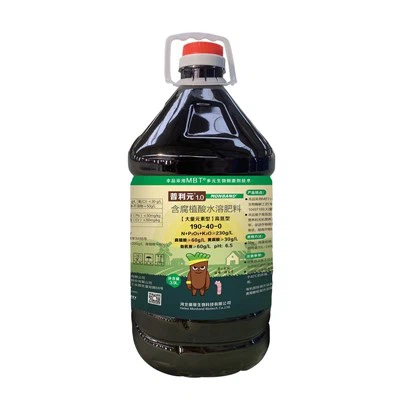
Hey there, fellow gardeners and farmers! I'm a supplier of Fertilizer with Humic Acid, and I often get asked about the difference between regular fertilizer and fertilizer with humic acid. So, I thought I'd take a moment to break it down for you in a way that's easy to understand.
What's Regular Fertilizer?
Let's start with the basics. Regular fertilizers are the ones you've probably seen on the shelves of your local gardening store. They usually come in the form of granules, powders, or liquids, and they're designed to provide essential nutrients to plants. The three main nutrients you'll find in most regular fertilizers are nitrogen (N), phosphorus (P), and potassium (K), often referred to as NPK.
Nitrogen is crucial for plant growth and helps with the development of leaves and stems. Phosphorus plays a key role in root development, flowering, and fruiting. Potassium is important for overall plant health, helping with disease resistance and water regulation.
Regular fertilizers are great at giving plants a quick boost of these nutrients. They're formulated to be easily absorbed by plants, so you can see results pretty fast. For example, if your plants are looking a bit pale and weak, a dose of nitrogen-rich fertilizer can green them up in no time.
However, regular fertilizers do have some limitations. They mainly focus on providing the basic NPK nutrients, and they don't do much to improve the soil structure or the long-term health of the soil. Over time, using only regular fertilizers can lead to soil degradation, as the soil loses its natural fertility and beneficial microorganisms.
What's Fertilizer with Humic Acid?
Now, let's talk about fertilizer with humic acid. Humic acid is a natural substance that's found in soil, peat, and other organic materials. It's formed over thousands of years through the decomposition of plant and animal matter.
When humic acid is added to fertilizer, it brings a whole host of benefits to the table. First of all, humic acid helps to improve the soil structure. It acts like a glue, binding soil particles together to create larger aggregates. This improves soil aeration and water infiltration, allowing plant roots to grow more easily and access nutrients and water more efficiently.
In addition to improving soil structure, humic acid also helps to increase the cation exchange capacity (CEC) of the soil. CEC is a measure of the soil's ability to hold and exchange nutrients. When the CEC is high, the soil can hold onto more nutrients and make them available to plants over a longer period of time.
Another great thing about fertilizer with humic acid is that it enhances the availability of nutrients in the soil. Humic acid can chelate (bind) with nutrients like iron, zinc, and manganese, making them more soluble and easier for plants to absorb. This means that even if the soil has low levels of these nutrients, plants can still access them more effectively.
Fertilizer with humic acid also promotes the growth of beneficial microorganisms in the soil. These microorganisms play a crucial role in breaking down organic matter, releasing nutrients, and protecting plants from diseases. By creating a healthy environment for these microorganisms, humic acid helps to improve the overall health of the soil and the plants growing in it.
The Key Differences
So, what are the main differences between regular fertilizer and fertilizer with humic acid?
Nutrient Availability
As I mentioned earlier, regular fertilizers provide a quick boost of NPK nutrients, but they don't do much to improve the long-term availability of these nutrients. Fertilizer with humic acid, on the other hand, not only provides the essential nutrients but also helps to make them more available to plants over a longer period of time. This means that plants can access the nutrients they need when they need them, leading to more consistent growth and better yields.


Soil Health
Regular fertilizers focus mainly on providing nutrients to plants, while fertilizer with humic acid also works to improve the soil health. By improving the soil structure, increasing the CEC, and promoting the growth of beneficial microorganisms, fertilizer with humic acid helps to create a healthy and fertile soil environment. This is important for the long-term sustainability of your garden or farm.
Plant Growth and Health
Plants that are grown with fertilizer with humic acid tend to be healthier and more resistant to diseases and pests. The improved soil structure and nutrient availability allow plants to develop stronger roots, which in turn leads to better overall growth and development. Additionally, the presence of beneficial microorganisms in the soil helps to protect plants from harmful pathogens.
Environmental Impact
Using fertilizer with humic acid can also have a positive impact on the environment. Since it helps to improve the soil structure and nutrient retention, there's less risk of nutrient runoff into waterways. Nutrient runoff can cause water pollution and harm aquatic ecosystems, so using a fertilizer that reduces this risk is a win for the environment.
Types of Fertilizer with Humic Acid
There are different types of Fertilizer with Humic Acid available on the market. One popular type is Bio Humic Fertilizer, which combines humic acid with beneficial microorganisms. These microorganisms help to break down organic matter in the soil, releasing nutrients and improving soil fertility.
Another type is Humic Acid Liquid Fertilizer, which is easy to apply and can be quickly absorbed by plants. Liquid fertilizers are great for foliar feeding, where you spray the fertilizer directly on the leaves of the plants. This allows the plants to absorb the nutrients through their leaves, providing a quick and efficient way to deliver nutrients.
Why Choose Our Fertilizer with Humic Acid?
As a supplier of fertilizer with humic acid, I'm proud to offer products that are of the highest quality. Our fertilizers are carefully formulated to provide the perfect balance of nutrients and humic acid, ensuring that your plants get the best possible care.
We source our humic acid from natural and sustainable sources, so you can be sure that you're using a product that's good for the environment. Our manufacturing process is also designed to preserve the beneficial properties of humic acid, so you're getting all the benefits that it has to offer.
In addition to the quality of our products, we also offer excellent customer service. Our team of experts is always available to answer your questions and provide you with advice on how to use our fertilizers effectively. Whether you're a beginner gardener or an experienced farmer, we're here to help you get the most out of your plants.
Contact Us for Procurement
If you're interested in trying our Fertilizer with Humic Acid, we'd love to hear from you. We offer competitive prices and flexible procurement options to meet your needs. Whether you're looking to buy in small quantities for your home garden or in large quantities for your farm, we can work with you to find the right solution.
Just reach out to us, and we'll start the conversation. We're confident that once you try our fertilizer with humic acid, you'll see the difference it can make in your plants and your soil.
References
- Brady, N. C., & Weil, R. R. (2008). The nature and properties of soils. Pearson Prentice Hall.
- Stevenson, F. J. (1994). Humus chemistry: genesis, composition, reactions. Wiley.
- Chen, Y., & Aviad, T. (1990). Effects of humic substances on plant growth. Advances in agronomy, 44, 163-213.