


Fertilizer with Humic Acid
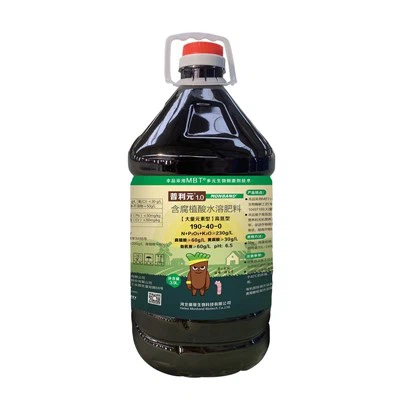
Fertilizer with humic acid is a functional fertilizer with multiple effects such as soil improvement, growth stimulation, fertilizer efficiency, stress resistance and quality improvement. It improves the physical, chemical and biological properties of the soil, creates a good environment for the root system of crops, and acts directly on the physiological metabolism of plants, thus realizing the goals of increasing yield and quality, saving fertilizer and increasing efficiency, and promoting sustainable agricultural development. Choosing the right type (mineral or biochemical), high-quality products and applying them scientifically (combining base application, follow-up application, leaf spraying and other methods) can maximize its benefits.
Product Features & Applications
Fertilizer with humic acid is ideal for use on all soils and plants under all conditions. Humic and fulvic acids in fertilizer with humic acid act as natural Humic and fulvic acids in fertilizer with humic acid act as natural chelating agents, binding to nutrients in the soil. The plants roots absorb these humic acid nutrient compounds effectively increasing the efficiency of the plants uptake of nutrients. The plants roots absorb these humic acid nutrient compounds effectively increasing the efficiency of the plants uptake of nutrients and decreasing nutrient losses caused by leaching. Being a concentrated and soluble powder, it is fast acting, and in liquid form, highly effective at delivering nutrients in the soil. Being a concentrated and soluble powder, it is fast acting, and in liquid form, highly effective at delivering humic acids deep into the soil and/or to the plant. In combination with fertilization, it allows you to get the In combination with fertilization, it allows you to get the most out of your fertilization program and may even reduce the amount of nutrients applied. It will contribute to improving soil quality, texture, water holding capacity, and sustainability, all while breaking down clay lattices and reducing sodium build up in soils.

The main types of fertilizer with humic acid
1. Mineral source humic acid fertilizer:
Raw material: mainly from weathered lignite, brown coal or peat.
Characteristics: High humic acid content (usually >50%), relatively large molecular weight, complex structure and many active groups. The effect is relatively long-lasting, but the water solubility is relatively poor (need activation treatment), the effect may be a little slow. It is the mainstream type in the market.
2. Biochemical xanthate fertilizer:
Raw material: Produced by microbial fermentation (e.g., sucrose, molasses, crop residues, etc.) process.
Characteristics: small molecular weight, excellent water solubility, easy to be absorbed and utilized by plants, fast effect. Xanthohumic acid is the component with the smallest molecular weight and highest activity among humic acids. However, the total humic acid content is usually lower than that of mineral source products.

Main functions of humic acid fertilizer
1. Improvement of soil structure:
Promotes Agglomerate Formation: Humic acid is the "natural glue" of the soil, bonding fine soil particles to form water-stable aggregates. This significantly improves soil permeability (for root respiration), water retention (to reduce drought stress) and drainage (to prevent waterlogging), and solves the problem of compacted, sticky or sandy soils.
2. Improve soil fertility and fertilizer retention capacity:
Strong ion exchange and adsorption capacity: Humic acid has a large negative charge and can adsorb cationic nutrients (such as ammonium ions NH₄⁺, potassium ions K⁺, calcium ions Ca²⁺, magnesium ions Mg²⁺) in the soil, trace element ions, etc.) to prevent them from being lost with water (leaching).

Reduce phosphorus fixation: In acidic soil, humic acid can combine with iron and aluminum ions to reduce their fixation of phosphorus; in calcareous soil, it can combine with calcium ions to reduce the fixation of phosphorus, thus improving the utilization rate of phosphorus fertilizer.
Chelating (complexing) trace elements: humic acid can form stable and easily absorbed complexes with trace elements such as iron, manganese, zinc and copper, solving deficiency diseases.
Our factory
Factory-Lincheng County
With an annual output of 200,000 tons of special fertilizer, Monband Lincheng county Factory has a number of production units: 3 colored liquid production lines, 1 multi-layer coating granulation line, 1 micro-granular granulation line, 1 in-situ reaction coating production line, 1 MBT soil conditioner, MBT bio-organic fertilizer, MBT organic and inorganic compound fertilizer production line, 1 biological fermentation production line, etc.
The main research projects of MSiC R&D center of Lincheng county Factory are: MBT (MultipleBio-Stimulants Technology) and Aryabhata new formulation, new Dosage Form development, indoor biotesting and so on.


Our Certificate
Five products have been certified by EU REACH
Member of International Fertilizer Industry Association (lFA)

Hot Tags: fertilizer with humic acid, China fertilizer with humic acid manufacturers, suppliers, factory, humic acid fertilizer, humacid organic manure, best humic acid fertilizer, humic acid pellets, fulvic acid fertilizer, humic and fulvic acid fertilizer
Previous
Humic Organic FertilizerYou Might Also Like




Send Inquiry