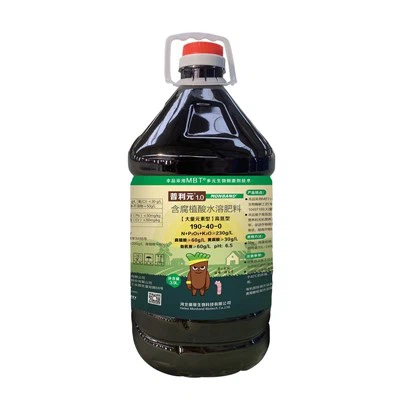
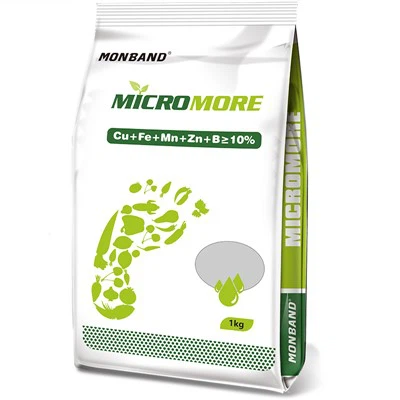
As a supplier of Humic Organic Fertilizer, I've witnessed firsthand the transformative power of this remarkable product on soil health and agricultural productivity. In this blog, I'll delve into the science behind how Humic Organic Fertilizer changes the chemical composition of soil, exploring its benefits and applications.
Understanding Humic Organic Fertilizer
Humic Organic Fertilizer is derived from natural organic materials such as peat, lignite, and leonardite. These materials undergo a complex process of decomposition and humification, resulting in the formation of humic substances. Humic substances are a mixture of organic compounds that play a crucial role in soil fertility and plant growth.
There are different types of Humic Organic Fertilizer available in the market, including Humic Liquid Fertilizer and Liquid Humic Acid Organic Fertilizer. These fertilizers are rich in humic and fulvic acids, which are the active components responsible for their beneficial effects on soil and plants.
How Humic Organic Fertilizer Changes Soil Chemical Composition
1. pH Regulation
One of the primary ways Humic Organic Fertilizer affects soil chemistry is by regulating soil pH. Most agricultural soils have a pH range that can vary from acidic to alkaline. Extreme pH levels can limit the availability of essential nutrients to plants. Humic substances in the fertilizer act as natural buffers, helping to maintain a more neutral pH in the soil.
For acidic soils, humic acids can react with hydrogen ions, reducing soil acidity. In alkaline soils, they can chelate with calcium and magnesium ions, preventing the formation of insoluble salts and reducing soil alkalinity. This pH regulation creates a more favorable environment for nutrient uptake by plants.
2. Nutrient Availability
Humic Organic Fertilizer significantly improves the availability of nutrients in the soil. Humic and fulvic acids have a high cation exchange capacity (CEC). CEC is a measure of the soil's ability to hold and exchange positively charged ions (cations) such as calcium (Ca²⁺), magnesium (Mg²⁺), potassium (K⁺), and ammonium (NH₄⁺).

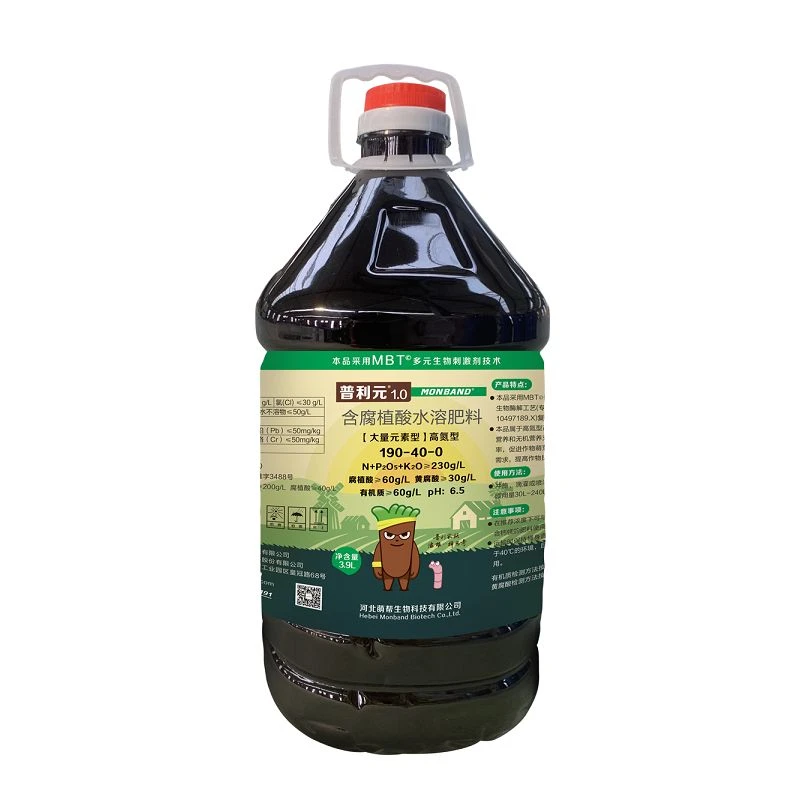
When applied to the soil, humic substances bind to these cations, preventing them from being leached away by rainfall or irrigation. At the same time, they release these nutrients slowly over time, making them available to plants as needed. For example, potassium is an essential nutrient for plant growth, and humic substances can ensure that it remains in the root zone for plants to absorb.
Fulvic acids, in particular, are known for their ability to chelate micronutrients such as iron (Fe), zinc (Zn), manganese (Mn), and copper (Cu). Chelation is a process where the acid forms a complex with the micronutrient, keeping it in a soluble and available form for plant uptake. This is especially important in soils where these micronutrients may be present but are not readily available to plants due to chemical reactions or high pH.
3. Soil Structure Improvement
The addition of Humic Organic Fertilizer also has a profound impact on soil structure. Humic substances act as a glue that binds soil particles together, forming aggregates. These aggregates create pore spaces in the soil, improving aeration and water infiltration.
A well - structured soil allows roots to penetrate more easily, access oxygen, and take up water and nutrients. Moreover, the improved soil structure reduces soil compaction, which can otherwise restrict root growth and nutrient uptake. This physical change in the soil also affects its chemical properties. For instance, better aeration promotes the activity of soil microorganisms, which play a vital role in nutrient cycling and decomposition of organic matter.
4. Organic Matter Enrichment
Humic Organic Fertilizer is a source of organic matter for the soil. Organic matter is essential for soil fertility as it provides a food source for soil microorganisms. When the fertilizer is added to the soil, the organic matter undergoes decomposition by bacteria, fungi, and other soil organisms.
During decomposition, these microorganisms release nutrients such as nitrogen (N), phosphorus (P), and sulfur (S) in forms that are available to plants. Additionally, the process of decomposition produces more humic substances, further enriching the soil with these beneficial compounds. This continuous cycle of organic matter decomposition and humification helps to maintain and improve soil fertility over time.
Benefits for Plant Growth
The changes in soil chemical composition brought about by Humic Organic Fertilizer have numerous benefits for plant growth. Improved nutrient availability means that plants can take up the essential elements they need for healthy development. This leads to stronger root systems, increased biomass production, and higher yields.
Plants grown in soil treated with Humic Organic Fertilizer are also more resistant to environmental stresses such as drought, salinity, and disease. The improved soil structure allows for better water retention, reducing the impact of drought conditions. The enhanced nutrient uptake and overall plant health make the plants more resilient to pathogens and pests.
Applications of Humic Organic Fertilizer
Humic Organic Fertilizer can be used in a variety of agricultural settings, including field crops, horticulture, and greenhouse production. It can be applied through different methods such as soil application, foliar spraying, or fertigation (applying fertilizer through irrigation systems).
For field crops like corn, wheat, and soybeans, soil application of Humic Organic Fertilizer at the time of planting or during the growing season can significantly improve yields. In horticulture, it can be used for vegetable gardens, orchards, and flower beds to enhance plant growth and quality. Greenhouse growers often use liquid forms of the fertilizer through fertigation systems to ensure precise nutrient delivery to their plants.
Contact Us for Purchasing
If you're interested in experiencing the benefits of Humic Organic Fertilizer for your agricultural or horticultural operations, we invite you to contact us for more information and to discuss your purchasing needs. Our team of experts is ready to provide you with detailed product information, application guidelines, and competitive pricing.
References
- Brady, N. C., & Weil, R. R. (2008). The Nature and Properties of Soils. Pearson Prentice Hall.
- Stevenson, F. J. (1994). Humus Chemistry: Genesis, Composition, Reactions. John Wiley & Sons.
- Chen, Y., & Aviad, T. (1990). Effects of humic substances on plant growth. In Humic Substances in Soil, Sediment, and Water: Geochemistry, Isolation, and Characterization (pp. 401 - 421). John Wiley & Sons.