

As a supplier of Humic Acid Liquid Fertilizer, I've witnessed firsthand the transformative power of this remarkable product in the agricultural realm. One of the most significant impacts it has is on the density of plant roots, a factor that is crucial for the overall health and productivity of plants. In this blog, I'll delve into how Humic Acid Liquid Fertilizer affects the density of plant roots, exploring the scientific mechanisms behind it and sharing real - world insights.
The Basics of Humic Acid Liquid Fertilizer
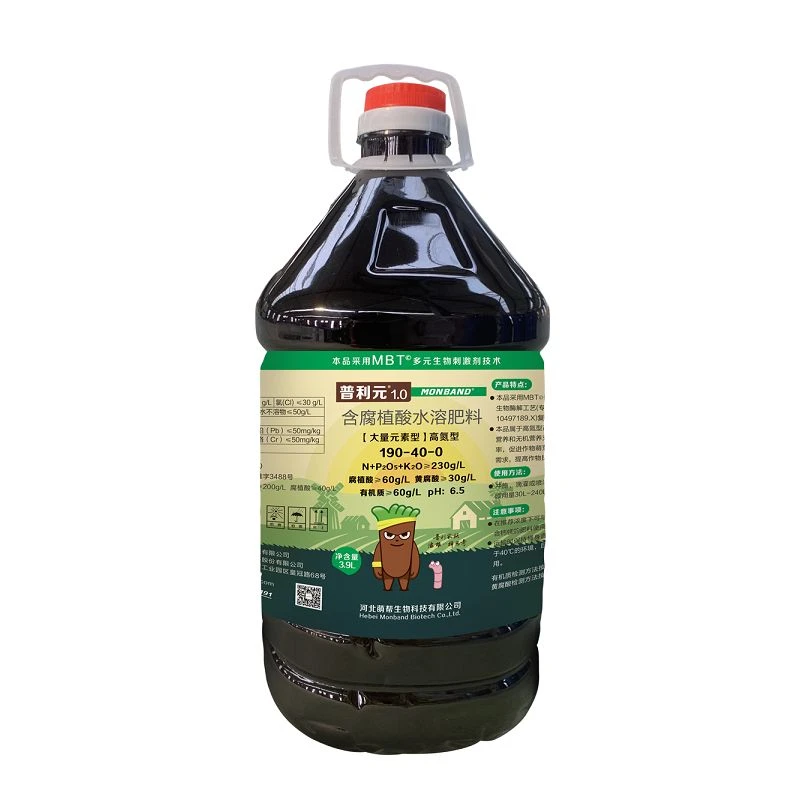
Before we dive into its impact on root density, let's briefly understand what Humic Acid Liquid Fertilizer is. Humic substances are organic compounds that are formed through the decomposition of plant and animal matter over a long period. Humic Acid Liquid Fertilizer is a concentrated form of these substances, which can be easily applied to the soil or plants. It is rich in essential nutrients such as nitrogen, phosphorus, and potassium, as well as trace elements like iron, zinc, and manganese. You can learn more about our Humic Liquid Fertilizer on our website.
Mechanisms of Action on Root Density
1. Improved Nutrient Uptake
One of the primary ways Humic Acid Liquid Fertilizer affects root density is by enhancing nutrient uptake. The humic acids in the fertilizer can chelate or bind to nutrients in the soil, making them more available for plant roots. For example, they can prevent the precipitation of phosphates in the soil, which often occurs in alkaline or high - calcium soils. When nutrients are more readily available, plants can grow more vigorously, and this includes the development of a denser root system. A study published in the "Journal of Plant Nutrition" found that plants treated with humic acid - based fertilizers had significantly higher levels of nutrient uptake compared to untreated plants. This increased nutrient availability stimulates root growth, leading to a greater number of root hairs and lateral roots, ultimately increasing root density.

2. Enhanced Soil Structure
Humic Acid Liquid Fertilizer also plays a crucial role in improving soil structure. It acts as a soil conditioner, binding soil particles together to form aggregates. These aggregates create larger pore spaces in the soil, which improve aeration and water infiltration. When the soil has better aeration, roots can breathe more easily, and oxygen can reach the root cells more efficiently. Adequate oxygen is essential for root growth and development. Moreover, improved water infiltration means that roots have better access to water, reducing the risk of waterlogging and root rot. A well - structured soil provides a more favorable environment for root growth, allowing roots to spread out and grow more densely. Our Liquid Humic Acid Organic Fertilizer is designed to have a positive impact on soil structure.
3. Hormonal Effects
Humic acids can also have hormonal - like effects on plants. They can stimulate the production of plant growth hormones such as auxins, cytokinins, and gibberellins. Auxins, in particular, are known to promote root growth. They stimulate cell division and elongation in the root tips, leading to the formation of new roots and an increase in root length and density. Cytokinins are involved in cell differentiation and can also contribute to the development of a more complex and dense root system. By influencing the hormonal balance in plants, Humic Acid Liquid Fertilizer can directly affect root growth and density.
Real - World Examples of Increased Root Density
In my experience as a supplier, I've received numerous reports from farmers and gardeners about the positive effects of our Humic Acid Liquid Fertilizer on root density. For instance, a large - scale corn farmer in the Midwest of the United States applied our Humic Acid Organic Fertilizer to his fields. After a growing season, he noticed a significant increase in the root density of his corn plants. The roots were thicker, more branched, and extended deeper into the soil. This not only improved the plant's ability to absorb nutrients and water but also made the plants more resistant to drought and wind damage.
Another example comes from a small - scale vegetable gardener. She used our liquid fertilizer on her tomato plants. The tomato plants developed a much denser root system compared to the previous year when she didn't use the fertilizer. As a result, the plants were more productive, with larger and more abundant fruits. These real - world examples demonstrate the practical benefits of using Humic Acid Liquid Fertilizer to increase root density.
The Importance of Root Density for Plant Health and Productivity
A dense root system is essential for the overall health and productivity of plants. Firstly, it provides better anchorage for the plant, preventing it from being easily uprooted by wind or heavy rain. Secondly, a denser root system can explore a larger volume of soil, allowing the plant to access more nutrients and water. This is especially important in nutrient - poor or dry soils. Thirdly, roots with a higher density can form symbiotic relationships with beneficial soil microorganisms more effectively. These microorganisms, such as mycorrhizal fungi, can further enhance nutrient uptake and protect the plant from diseases.
Factors Affecting the Impact on Root Density
While Humic Acid Liquid Fertilizer generally has a positive impact on root density, several factors can influence its effectiveness. The type of soil is one of the most important factors. In sandy soils, which have low nutrient - holding capacity, the fertilizer can have a more pronounced effect on improving nutrient availability and root growth. In clay soils, it can help to break up the compacted soil and improve aeration. The application rate and frequency of the fertilizer also matter. Applying too little may not produce the desired results, while applying too much can be wasteful and may even have negative effects on plant growth. Additionally, the type of plant can affect how it responds to the fertilizer. Some plants are more responsive to humic acid - based fertilizers than others.
Conclusion
In conclusion, Humic Acid Liquid Fertilizer has a profound impact on the density of plant roots through multiple mechanisms, including improved nutrient uptake, enhanced soil structure, and hormonal effects. The increase in root density leads to healthier, more productive plants that are better able to withstand environmental stresses. As a supplier, I'm proud to offer high - quality Humic Acid Liquid Fertilizer products that can make a real difference in agriculture.
If you're interested in improving the root density of your plants and enhancing their overall health and productivity, I encourage you to consider our Humic Acid Liquid Fertilizer products. We're always ready to discuss your specific needs and provide you with the best solutions. Contact us to start a procurement discussion and take your plants to the next level.
References
- Journal of Plant Nutrition. (Year). [Title of the specific study on humic acid and nutrient uptake].
- Various field reports from farmers and gardeners using our Humic Acid Liquid Fertilizer products.


