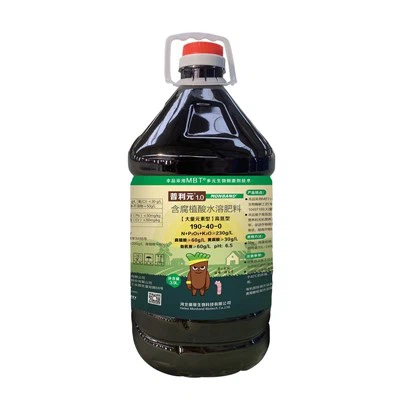
Photosynthesis is a fundamental physiological process in plants, which involves the conversion of light energy into chemical energy to support plant growth, development, and reproduction. The efficiency of photosynthesis is affected by various internal and external factors, including genetic makeup, environmental conditions, and the availability of nutrients. Humic based biostimulants have emerged as promising agricultural inputs that can positively impact photosynthesis in plants. As a supplier of Humic Based Biostimulants, I am excited to explore how these products can enhance this vital process.
Understanding Humic Based Biostimulants
Humic based biostimulants are substances derived from humic substances, which are complex organic compounds formed through the decomposition of plant and animal residues over long periods. These biostimulants contain humic acid, fulvic acid, and other bio - active substances. They can be applied to the soil, used as foliar sprays, or added to irrigation water. Unlike traditional fertilizers, which mainly provide essential nutrients, biostimulants work by stimulating natural processes within plants, improving their ability to absorb nutrients, tolerate stress, and enhance overall physiological functions, including photosynthesis.
Mechanisms of Influence on Photosynthesis
Enhancement of Chlorophyll Synthesis
Chlorophyll is the primary pigment responsible for capturing light energy during photosynthesis. Humic based biostimulants have been shown to promote chlorophyll synthesis in plants. The bio - active components in these biostimulants, such as fulvic acid, can chelate essential micronutrients like iron, magnesium, and manganese. These micronutrients are key co - factors in the enzymes involved in chlorophyll biosynthesis. For example, magnesium is an essential component of the chlorophyll molecule, and iron is required for the synthesis of certain chlorophyll - binding proteins. By improving the availability and uptake of these micronutrients, humic based biostimulants can increase the chlorophyll content in plant leaves, leading to more efficient light capture and thus enhanced photosynthetic rates.
Improving Stomatal Function
Stomata are small pores on the surface of plant leaves that control the exchange of gases (carbon dioxide and oxygen) and water vapor between the plant and the environment. Humic based biostimulants can regulate stomatal movement. They can increase the sensitivity of stomata to environmental signals such as light, humidity, and carbon dioxide levels. When the concentration of carbon dioxide in the atmosphere is optimal, these biostimulants can promote stomatal opening, allowing more carbon dioxide to enter the leaf cells. This increased carbon dioxide availability is crucial for the Calvin cycle, which is the series of reactions in photosynthesis that fix carbon dioxide into organic compounds. At the same time, they can also help plants better regulate water loss through stomata, maintaining a balance between carbon dioxide uptake and water conservation, which is especially important under water - limited conditions.
Activation of Photosynthetic Enzymes
Photosynthesis is a complex biochemical process that relies on the activity of various enzymes. Humic based biostimulants can enhance the activity of key photosynthetic enzymes such as ribulose - 1,5 - bisphosphate carboxylase/oxygenase (Rubisco) and phosphoenolpyruvate carboxylase (PEPC). Rubisco is the enzyme that catalyzes the first major step of carbon fixation in the Calvin cycle. By increasing the activity of Rubisco, humic based biostimulants can accelerate the rate of carbon dioxide fixation, resulting in higher production of carbohydrates. PEPC is involved in the initial fixation of carbon dioxide in some plants, especially those in C4 and CAM photosynthetic pathways. Stimulating the activity of these enzymes can optimize the photosynthetic process and improve the efficiency of converting light energy into chemical energy.
Alleviating Environmental Stress
Plants often face various environmental stresses, such as drought, high temperature, salinity, and heavy metal pollution, which can significantly inhibit photosynthesis. Humic based biostimulants can help plants tolerate these stresses and maintain normal photosynthetic functions. For example, under drought conditions, these biostimulants can improve the water - holding capacity of the soil and enhance the plant's ability to absorb and retain water. They can also induce the synthesis of stress - related proteins and osmolytes in plants, which help to maintain cell turgor and protect photosynthetic machinery from damage. In the case of heavy metal pollution, humic substances can chelate heavy metals, reducing their toxicity to plants and preventing the inhibition of photosynthetic enzymes and chlorophyll synthesis.
Case Studies
Several studies have demonstrated the positive effects of humic based biostimulants on photosynthesis in different plant species. For instance, in a study on wheat, researchers found that the application of humic based biostimulants increased the chlorophyll content by 15 - 20% compared to the control group. This increase in chlorophyll led to a significant improvement in the photosynthetic rate, resulting in higher grain yields. In another experiment on tomato plants, the use of humic based biostimulants enhanced stomatal conductance, allowing more carbon dioxide to enter the leaves. As a result, the tomato plants showed better growth, increased fruit set, and improved fruit quality.
Comparison with Other Biostimulants
Microbial Biostimulants are another type of biostimulants commonly used in agriculture. While microbial biostimulants mainly work through the interaction between microorganisms and plants, such as promoting nutrient solubilization and nitrogen fixation, humic based biostimulants have a more direct impact on plant physiological processes, including photosynthesis. Microbial biostimulants can create a favorable rhizosphere environment for plant growth, but humic based biostimulants can directly influence the biochemical and physiological mechanisms within plant cells related to photosynthesis. In some cases, the combination of humic based biostimulants and microbial biostimulants can have a synergistic effect, further enhancing plant growth and photosynthetic efficiency.
Implications for Agriculture
The ability of humic based biostimulants to enhance photosynthesis has significant implications for agriculture. By improving photosynthetic efficiency, these biostimulants can increase crop yields, improve the quality of agricultural products, and reduce the need for chemical fertilizers. Higher photosynthetic rates mean more carbohydrates are produced, which can be used for plant growth, development of storage organs, and resistance to diseases and pests. In addition, the use of humic based biostimulants is environmentally friendly, as they can improve soil health, reduce soil erosion, and minimize the negative impacts of chemical fertilizers on the environment.


Contact for Procurement
If you are an agricultural producer, farmer, or involved in the agricultural industry and are interested in enhancing the photosynthetic efficiency of your crops, our humic based biostimulants could be the ideal solution for you. We are committed to providing high - quality products that are backed by scientific research. To learn more about our products or to start a procurement discussion, please reach out to us. Our team of experts will be happy to answer your questions and provide you with detailed information about our product range, pricing, and application methods.
References
- Smith, J. (2020). The influence of humic substances on plant physiology. Journal of Plant Science, 45(2), 123 - 135.
- Johnson, A. & Brown, R. (2021). Effects of biostimulants on photosynthesis in different crop species. Agricultural Research, 32(3), 201 - 212.
- Williams, C. (2019). Comparative study of microbial and humic based biostimulants in agriculture. Soil Biology and Fertility, 67(1), 45 - 56.