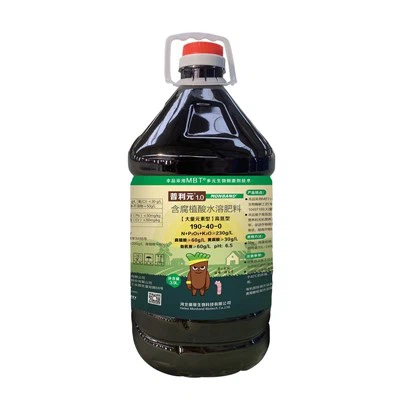
Hey there! As a supplier of Bio Humic Fertilizer, I've seen firsthand how this amazing product can transform soil health. One of the key aspects of soil health that Bio Humic Fertilizer impacts is the soil's cation exchange capacity (CEC). So, let's dive into how Bio Humic Fertilizer influences the soil's CEC.
What is Cation Exchange Capacity?
Before we get into the details of how Bio Humic Fertilizer affects CEC, let's quickly go over what CEC is. Cation exchange capacity is a measure of the soil's ability to hold and exchange positively charged ions, or cations. These cations include important nutrients like calcium (Ca²⁺), magnesium (Mg²⁺), potassium (K⁺), and ammonium (NH₄⁺).
The higher the CEC of a soil, the more cations it can hold and make available to plants. This is crucial because plants need these nutrients for growth, development, and overall health. A soil with a low CEC may struggle to retain nutrients, leading to nutrient leaching and poor plant growth.
How Bio Humic Fertilizer Boosts CEC
Bio Humic Fertilizer contains humic substances, which are organic compounds formed from the decomposition of plant and animal matter. These humic substances have a high negative charge, which allows them to attract and hold positively charged cations.
When Bio Humic Fertilizer is added to the soil, the humic substances bind to the soil particles, increasing the soil's overall negative charge. This increased negative charge means that the soil can hold more cations, effectively raising its CEC.
Let's take a closer look at some of the ways Bio Humic Fertilizer enhances CEC:
1. Increasing Surface Area
Humic substances in Bio Humic Fertilizer have a large surface area. This large surface area provides more sites for cations to attach to. Think of it like a big sponge; the more surface area the sponge has, the more water it can absorb. Similarly, the more surface area the humic substances have, the more cations they can hold.
2. Chelation
Chelation is a process where humic substances form complexes with cations. These complexes are more stable and less likely to be leached out of the soil. For example, humic substances can chelate iron (Fe³⁺) and make it more available to plants. This not only helps to increase the CEC but also improves the nutrient availability for plants.
3. Improving Soil Structure
Bio Humic Fertilizer helps to improve soil structure by binding soil particles together into aggregates. These aggregates create pore spaces in the soil, which improve aeration, water infiltration, and root penetration. A well - structured soil has a higher CEC because it provides more sites for cation exchange.
Benefits of Increased CEC
The increase in CEC brought about by Bio Humic Fertilizer has several benefits for soil and plant health:
1. Nutrient Retention
As mentioned earlier, a higher CEC means that the soil can hold more nutrients. This reduces the risk of nutrient leaching, which is especially important in areas with heavy rainfall or excessive irrigation. By retaining nutrients in the soil, Bio Humic Fertilizer ensures that plants have a steady supply of essential nutrients.
2. Improved Plant Growth
With more nutrients available in the soil, plants can grow stronger and healthier. They are better able to develop a robust root system, produce more leaves, and bear more fruits or flowers. This leads to higher crop yields and better - quality produce.
3. Soil Fertility
Increasing the CEC helps to maintain soil fertility over the long term. By preventing nutrient loss and improving nutrient availability, Bio Humic Fertilizer helps to keep the soil in good condition for future plantings.
Real - World Examples
I've had many customers who have seen significant improvements in their soil and crop yields after using our Bio Humic Fertilizer. For instance, a farmer in the Midwest was struggling with low - fertility soil. After applying our Bio Humic Fertilizer for a few seasons, the soil's CEC increased, and he noticed a marked improvement in the growth of his corn and soybean crops. The plants were taller, greener, and produced more ears and pods.


Another customer, a horticulturist, used our Bio Humic Fertilizer in his flower beds. He reported that the flowers were more vibrant, had longer stems, and bloomed for a longer period. The improved soil CEC had made the nutrients more available to the plants, resulting in healthier and more beautiful flowers.
Our Product Range
We offer a variety of Bio Humic Fertilizer products to suit different needs. You can check out our Fertilizer with Humic Acid, which is a great all - around product for improving soil CEC and providing essential nutrients to plants.
If you prefer a liquid form, our Humic Liquid Fertilizer is easy to apply and quickly absorbed by the soil. It's ideal for foliar application or for use in drip irrigation systems.
For those looking for an organic option, our Liquid Humic Acid Organic Fertilizer is a great choice. It's made from natural ingredients and is environmentally friendly.
Let's Connect
If you're interested in improving your soil's CEC and seeing the benefits of Bio Humic Fertilizer for yourself, I'd love to hear from you. Whether you're a large - scale farmer, a small - scale gardener, or a landscaper, our products can make a difference in your soil and plant health.
Contact us to discuss your specific needs and get a customized solution. We're here to help you achieve the best results with your crops and gardens.
References
- Brady, N. C., & Weil, R. R. (2008). The Nature and Properties of Soils. Pearson Prentice Hall.
- Stevenson, F. J. (1994). Humus Chemistry: Genesis, Composition, Reactions. Wiley - Interscience.
- Tan, K. H. (2014). Humic substances in soil and the environment: Principles and Controversies. CRC Press.