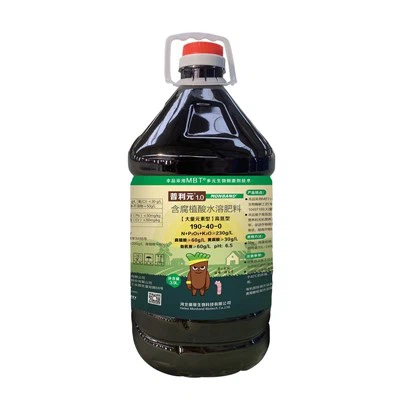
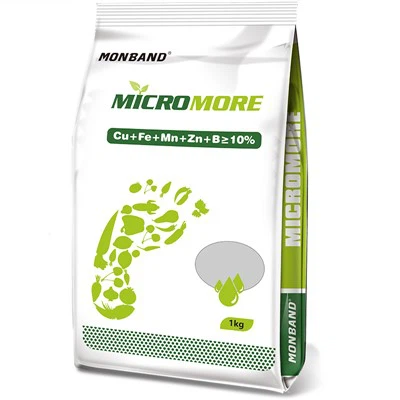
Hey there! I'm a supplier of Bio Humic Fertilizer, and today I want to chat about how this amazing product affects the soil's boron availability. Boron is a micronutrient that plays a crucial role in plant growth and development. It's involved in cell wall formation, sugar transport, and reproductive processes. However, boron availability in soil can be a bit tricky, and that's where our Bio Humic Fertilizer comes in.
First off, let's understand what Bio Humic Fertilizer is. It's a type of fertilizer that contains humic substances, which are organic compounds formed from the decomposition of plant and animal matter. These humic substances have a bunch of benefits for the soil and plants. You can check out more about Bio Humic Fertilizer on our website.
Now, let's dive into how Bio Humic Fertilizer impacts boron availability in the soil. One of the key ways is through its ability to improve soil structure. When you add Bio Humic Fertilizer to the soil, it helps to create a more porous and well - aerated environment. This is important because boron moves through the soil in water. A better - structured soil allows water to move more freely, which in turn helps boron to be more evenly distributed throughout the soil profile.
Another important aspect is the cation exchange capacity (CEC) of the soil. Bio Humic Fertilizer can increase the CEC of the soil. CEC is a measure of the soil's ability to hold and exchange nutrients. Boron exists in the soil as an anion (borate ions). The increased CEC due to the addition of Bio Humic Fertilizer can help to retain these borate ions in the soil, preventing them from being leached away by heavy rainfall or excessive irrigation. This means that more boron is available for plant uptake over a longer period of time.


Bio Humic Fertilizer also has a chelating effect. Chelation is a process where organic molecules bind to metal ions or nutrients. In the case of boron, the humic substances in the fertilizer can form complexes with borate ions. These complexes are more stable and less likely to react with other substances in the soil that could make boron unavailable to plants. For example, in alkaline soils, boron can react with calcium and magnesium to form insoluble compounds. The chelating action of Bio Humic Fertilizer helps to keep boron in a soluble and available form.
Moreover, the addition of Bio Humic Fertilizer can stimulate microbial activity in the soil. Soil microorganisms play a vital role in nutrient cycling, including the availability of boron. Some microorganisms can solubilize boron that is bound in the soil minerals, making it more accessible to plants. The organic matter in Bio Humic Fertilizer provides a food source for these beneficial microbes, promoting their growth and activity.
Let's talk about some real - world implications of these effects. In agricultural fields, where boron deficiency can lead to reduced crop yields and poor quality produce, using Bio Humic Fertilizer can make a significant difference. Crops like fruits, vegetables, and grains all require an adequate supply of boron for proper growth. For example, in apple orchards, boron deficiency can cause fruit deformation and reduced sugar content. By using Bio Humic Fertilizer, farmers can ensure that their apple trees have access to enough boron, resulting in better - quality apples.
In addition to improving boron availability, Bio Humic Fertilizer has other benefits for plants. It can enhance root development, making the plants more efficient at taking up water and nutrients. Stronger roots also help plants to withstand environmental stresses such as drought and disease. You can learn more about Fertilizer with Humic Acid and its overall benefits on our site.
We also offer Humic Acid Liquid Fertilizer, which is a convenient option for farmers and gardeners. The liquid form allows for easy application, either through foliar spraying or soil drenching. This can be especially useful when you need to quickly correct a boron deficiency or give your plants a boost during critical growth stages.
If you're a farmer, gardener, or anyone involved in the agricultural industry, you might be wondering how to use Bio Humic Fertilizer effectively to improve boron availability. The application rate depends on several factors such as the type of soil, the crop being grown, and the existing boron levels in the soil. It's always a good idea to conduct a soil test first to determine the exact needs of your soil.
In general, for most agricultural soils, an application rate of 100 - 200 kg per hectare of Bio Humic Fertilizer can be a good starting point. You can apply it during the pre - planting stage or as a top - dressing during the growing season. If you're using the liquid form, you can follow the instructions on the product label for dilution and application.
In conclusion, Bio Humic Fertilizer is a powerful tool for improving the soil's boron availability. Its ability to enhance soil structure, increase CEC, chelate boron, and stimulate microbial activity all contribute to making more boron available to plants. This, in turn, leads to better - growing plants, higher crop yields, and improved quality of produce.
If you're interested in learning more about our Bio Humic Fertilizer or want to start using it on your farm or garden, don't hesitate to get in touch. We're here to help you make the most of this amazing product and improve your agricultural outcomes. Whether you have questions about application rates, product compatibility, or anything else, our team of experts is ready to assist you. Let's work together to create healthier soils and more productive crops!
References
- Brady, N. C., & Weil, R. R. (2008). The nature and properties of soils. Pearson Prentice Hall.
- Stevenson, F. J. (1994). Humus chemistry: genesis, composition, reactions. Wiley - Interscience.
- Marschner, H. (2012). Mineral nutrition of higher plants. Academic Press.