In the realm of modern agriculture, the pursuit of high - quality crop production is a continuous endeavor. Among the various factors that influence crop quality, the role of fertilizers cannot be overstated. As a leading supplier of humic fulvic acid fertilizer, I have witnessed firsthand the significant impact this type of fertilizer can have on crop fiber quality.
Understanding Humic Fulvic Acid Fertilizer
Humic fulvic acid fertilizer is a unique blend that combines humic acid and fulvic acid. Humic acid is a complex organic substance derived from the decomposition of plant and animal matter over long periods. It is rich in carbon and has a high molecular weight. Fulvic acid, on the other hand, is a smaller - sized organic acid with a more active chemical structure. It can easily penetrate plant cells and carry nutrients along with it.
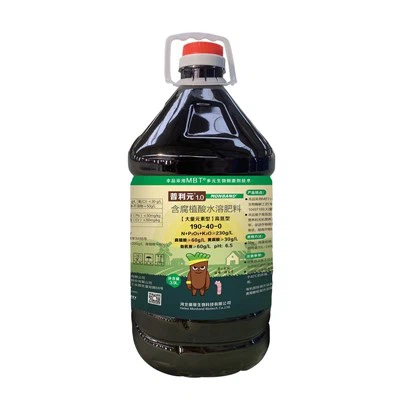
Our Humic Liquid Fertilizer and Liquid Humic Acid Organic Fertilizer are formulated to provide a balanced supply of these essential acids. These fertilizers are not only rich in humic and fulvic acids but also contain a variety of macro and micronutrients, which are crucial for plant growth and development.
Mechanisms of Action on Crop Fiber Quality
Nutrient Uptake and Transport
One of the primary ways humic fulvic acid fertilizer affects crop fiber quality is by enhancing nutrient uptake. Fulvic acid has a strong chelating ability, which means it can bind to essential nutrients such as nitrogen, phosphorus, potassium, and trace elements like iron, zinc, and manganese. This chelation process prevents the nutrients from being fixed in the soil and makes them more available for plant roots to absorb.
For example, in cotton crops, improved nutrient uptake can lead to better fiber development. Nitrogen is essential for the synthesis of proteins, which are the building blocks of fiber cells. Phosphorus is involved in energy transfer processes within the plant, and potassium helps in maintaining cell turgor and regulating enzyme activity. When these nutrients are more readily available due to the action of humic fulvic acid, the cotton fibers can grow longer, stronger, and more uniform.
Soil Structure Improvement
Humic acid in the fertilizer plays a vital role in improving soil structure. It acts as a soil conditioner, binding soil particles together to form aggregates. This improves soil porosity, allowing for better aeration and water infiltration. In well - structured soil, plant roots can grow more freely, accessing nutrients and water more efficiently.
In crops like flax, which are grown for their fiber, a well - structured soil environment is crucial. The roots can penetrate deeper into the soil, absorbing more nutrients and water, which in turn promotes the growth of high - quality flax fibers. The improved soil structure also reduces soil compaction, which can otherwise restrict root growth and lead to poor fiber quality.
Hormonal Regulation
Humic fulvic acid can also influence plant hormonal balance. It has been shown to stimulate the production of plant hormones such as auxins, cytokinins, and gibberellins. These hormones play important roles in cell division, elongation, and differentiation, all of which are essential processes for fiber development.
Auxins, for instance, promote cell elongation. In fiber - producing crops, increased cell elongation can result in longer and finer fibers. Cytokinins are involved in cell division, which helps in increasing the number of fiber cells. Gibberellins can also enhance fiber length and quality by promoting internode elongation in plants.
Impact on Different Crop Fibers
Cotton
Cotton is one of the most important fiber crops globally. The application of humic fulvic acid fertilizer can have several positive effects on cotton fiber quality. Research has shown that cotton plants treated with our Humic Acid Organic Fertilizer have longer staple lengths, higher fiber strength, and better micronaire values.
Longer staple lengths are desirable in the textile industry as they are easier to spin into high - quality yarns. Higher fiber strength ensures that the yarns can withstand the stresses of the spinning and weaving processes without breaking. The micronaire value, which is a measure of fiber fineness and maturity, is also improved, indicating better overall fiber quality.
Flax
Flax is another important fiber crop, known for its strong and durable fibers. Humic fulvic acid fertilizer can enhance flax fiber quality by promoting root growth and nutrient uptake. The improved nutrient availability helps in the synthesis of lignin and cellulose, which are the main components of flax fibers.
Lignin provides rigidity and strength to the fibers, while cellulose contributes to their flexibility. By optimizing the production of these components, the flax fibers become stronger, more uniform, and have better spinning properties.
Hemp
Hemp fibers are increasingly being used in various industries, including textiles, construction, and automotive. Humic fulvic acid fertilizer can improve hemp fiber quality by enhancing plant growth and development. It can increase the fiber yield per plant and improve the physical properties of the fibers, such as tensile strength and fineness.
The fertilizer also helps in reducing the content of impurities in the hemp fibers, making them more suitable for high - end applications.
Case Studies
We have conducted several field trials to evaluate the impact of our humic fulvic acid fertilizers on crop fiber quality. In a cotton field trial, two plots were set up: one treated with our humic fulvic acid fertilizer and the other with a conventional fertilizer.
The results showed that the cotton plants in the plot treated with our fertilizer had an average staple length increase of 5% compared to the conventional plot. The fiber strength also improved by 8%, and the micronaire value was more consistent within the acceptable range.
In a flax field trial, the application of our liquid humic acid organic fertilizer led to a 10% increase in fiber yield per hectare. The fibers also had better tensile strength and were more uniform in diameter, making them more suitable for high - quality textile production.


Conclusion
In conclusion, humic fulvic acid fertilizer has a profound impact on the fiber quality of crops. Through its mechanisms of enhancing nutrient uptake, improving soil structure, and regulating plant hormones, it can significantly improve the physical and chemical properties of crop fibers.
Whether it is cotton, flax, or hemp, the use of our high - quality humic fulvic acid fertilizers can lead to longer, stronger, and more uniform fibers, which are highly valued in the textile and other industries.
If you are interested in improving the fiber quality of your crops and would like to learn more about our humic fulvic acid fertilizers, we invite you to contact us for procurement and further discussions. We are committed to providing you with the best solutions for your agricultural needs.
References
- Stevenson, F. J. (1994). Humus Chemistry: Genesis, Composition, Reactions. Wiley - Interscience.
- Chen, Y., & Aviad, T. (1990). Effects of humic substances on plant growth. In Humic substances in soil and crop sciences: Selected readings (pp. 163 - 190). American Society of Agronomy.
- Nardi, S., Pizzeghello, D., & Muscolo, A. (2002). Humic substances as biostimulants of plant growth. In Biostimulants in agriculture (pp. 21 - 42). CRC Press.