Hey there, fellow plant enthusiasts! As a supplier of Fertilizer with Humic Acid, I've seen firsthand how this amazing product can work wonders for plants. Today, I'm gonna dive into one of the most fascinating aspects: how fertilizer with humic acid influences the root hair development of plants.
First off, let's talk about what root hairs are and why they're so important. Root hairs are tiny, hair - like structures that grow from the surface of plant roots. They may be small, but they play a huge role in a plant's life. Root hairs increase the surface area of the roots, which allows the plant to absorb more water and nutrients from the soil. Think of them as little straws that suck up all the good stuff the plant needs to grow big and strong.
Now, here's where humic acid comes in. Humic acid is a natural organic compound that's found in soil, peat, and other organic materials. When we add it to fertilizer, it can have some pretty remarkable effects on root hair development.
One of the main ways humic acid helps is by improving soil structure. You see, in some soils, the particles can be packed together too tightly, making it hard for roots to grow and for water and nutrients to move around. Humic acid acts like a soil conditioner. It helps to loosen up the soil, creating more space for the roots to spread out. This gives the root hairs more room to grow and explore the soil, which means they can access more resources.


Another great thing about humic acid is that it can chelate, or bind to, essential nutrients in the soil. Nutrients like iron, zinc, and manganese are super important for plant growth, but sometimes they can be locked up in the soil and not available for the plant to use. Humic acid grabs onto these nutrients and makes them more soluble and accessible to the roots. When the root hairs are exposed to a more nutrient - rich environment, they tend to grow longer and more abundantly.
Let's get a bit more technical for a moment. Humic acid can also stimulate the production of plant hormones. Hormones like auxins are known to play a key role in root development. When humic acid is present in the soil, it can trigger the plant to produce more of these hormones, which then signal the root cells to divide and differentiate into root hairs. This means that with the help of humic acid, the plant can develop a more extensive root hair system in a shorter amount of time.
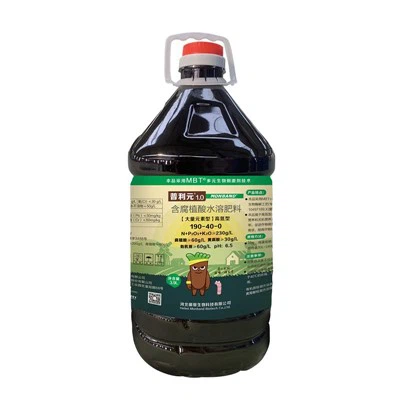
I've had customers who were struggling with poor plant growth in their gardens or farms. After using our Liquid Humic Acid Organic Fertilizer, they noticed a significant improvement in root hair development. The plants' roots were stronger, with more and longer root hairs. This led to better nutrient uptake, which in turn resulted in healthier, more productive plants.
Our Humic Acid Liquid Fertilizer is especially great for this purpose. It's easy to apply, and the humic acid is quickly absorbed by the soil and the roots. The liquid form allows for a more even distribution of the fertilizer, ensuring that every part of the root system gets a good dose of humic acid.
For those who are looking for a more natural and sustainable option, our Bio Humic Fertilizer is a top choice. It contains not only humic acid but also beneficial microorganisms. These microbes work together with the humic acid to further improve soil health and root development. They can break down organic matter in the soil, releasing even more nutrients for the root hairs to absorb.
But it's not just about the quantity of root hairs. The quality also matters. Root hairs that are grown in the presence of humic acid are often more resistant to environmental stresses. For example, in drought conditions, plants with well - developed root hairs can access water deeper in the soil. Humic acid helps to strengthen the cell walls of the root hairs, making them more resilient to drying out.
In addition, humic acid can protect the root hairs from harmful pathogens. It has antibacterial and antifungal properties, which can prevent diseases from attacking the delicate root hairs. This means that the plant's root system stays healthy and can continue to function properly, even in less - than - ideal conditions.
Now, I know you might be thinking, "This all sounds great, but how do I know if it will work for my plants?" Well, we've done a lot of research and testing on different types of plants, from vegetables to ornamental flowers. The results have been consistently positive. Whether you're growing tomatoes in your backyard or managing a large - scale wheat farm, our fertilizer with humic acid can make a real difference.
If you're interested in seeing the benefits of our fertilizer with humic acid for yourself, I encourage you to reach out. We're always happy to answer any questions you might have and help you find the right product for your specific needs. Whether you're a small - time gardener or a commercial farmer, we've got the solution for you.
In conclusion, fertilizer with humic acid can have a profound impact on root hair development. It improves soil structure, makes nutrients more available, stimulates hormone production, and protects the root hairs from stress and disease. By using our high - quality humic acid fertilizers, you can give your plants the best possible start and ensure a bountiful harvest or a beautiful garden.
So, if you're ready to take your plant growth to the next level, don't hesitate to get in touch. Let's start a conversation about how our Fertilizer with Humic Acid can work for you.
References
- Stevenson, F. J. (1994). Humus Chemistry: Genesis, Composition, Reactions. John Wiley & Sons.
- Chen, Y., & Aviad, T. (1990). Effects of humic substances on plant growth. In Humic substances in soil, sediment, and water: Geochemistry, isolation, and characterization (pp. 401 - 421). John Wiley & Sons.
- Nardi, S., Pizzeghello, D., Ruggiero, P., & Muscolo, A. (2002). Humic substances as biostimulants of plant growth. Soil Biology and Biochemistry, 34(11), 1527 - 1536.