Hey there, fellow farmers and gardening enthusiasts! I'm a supplier of Fertilizer with Humic Acid, and I'm super stoked to share with you how this amazing stuff can work wonders for your soil structure.
First off, let's talk a bit about what humic acid is. Humic acid is a natural organic compound that's formed when plant and animal matter decomposes over time. It's found in soil, peat, and other organic materials. When we add humic acid to fertilizer, we're basically giving your soil a big boost of goodness.
One of the key ways that fertilizer with humic acid improves soil structure is by enhancing soil aggregation. You see, soil is made up of different particles, like sand, silt, and clay. These particles can clump together to form aggregates. Good soil aggregation is crucial because it creates pore spaces in the soil. These pore spaces allow air, water, and nutrients to move freely through the soil.
When you use fertilizer with humic acid, the humic acid acts like a glue that helps bind these soil particles together. It forms stable aggregates that are less likely to break down. This means that your soil will have better drainage and aeration. For example, in heavy clay soils, which tend to be compacted and have poor drainage, humic acid can help break up the clay particles and create larger pore spaces. This allows water to drain more easily, preventing waterlogging and root rot.


On the other hand, in sandy soils, which drain too quickly and have trouble holding onto nutrients, humic acid can help improve the soil's water - holding capacity. The aggregates formed by humic acid can trap water and nutrients, making them available to plants for a longer period of time.
Another great thing about humic acid is its ability to chelate nutrients. Chelation is a process where humic acid binds to metal ions, like iron, zinc, and manganese. This makes these nutrients more soluble and available to plants. In soil, many nutrients can become locked up and unavailable to plants due to factors like soil pH. But humic acid can help release these nutrients and make them accessible.
For instance, iron is an essential nutrient for plant growth, but in alkaline soils, iron can form insoluble compounds and become unavailable to plants. Humic acid can chelate iron, keeping it in a soluble form that plants can easily absorb. This helps prevent nutrient deficiencies and promotes healthy plant growth.
Fertilizer with humic acid also has a positive impact on soil microbial activity. Soil is teeming with billions of microorganisms, like bacteria, fungi, and protozoa. These microorganisms play a vital role in breaking down organic matter, cycling nutrients, and protecting plants from diseases.
Humic acid provides a food source for these beneficial microorganisms. It contains carbon and other organic compounds that microbes can use for energy. When you add fertilizer with humic acid to your soil, you're essentially feeding these microbes and encouraging their growth.
The increased microbial activity has several benefits. Microbes help break down organic matter in the soil, releasing nutrients that are then available to plants. They also produce substances that can improve soil structure, such as polysaccharides, which further enhance soil aggregation.
Now, let's talk about some of the different types of fertilizers with humic acid that we offer. We have the Bio Humic Fertilizer. This fertilizer is enriched with beneficial microorganisms along with humic acid. The combination of microbes and humic acid can really supercharge your soil's health. The microbes work to break down organic matter and release nutrients, while the humic acid improves soil structure and chelates nutrients.
Our Humic Organic Fertilizer is another great option. It's made from high - quality organic materials and is rich in humic acid. This fertilizer not only improves soil structure but also adds a lot of organic matter to the soil. Organic matter is like the lifeblood of the soil. It helps retain moisture, provides nutrients, and supports microbial activity.
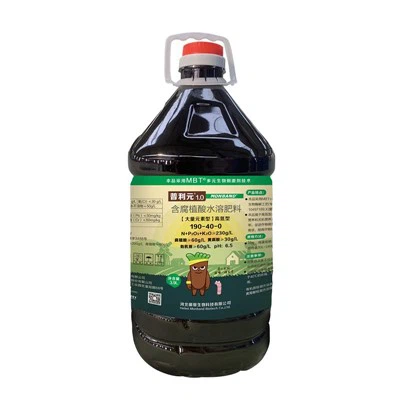
If you prefer a liquid option, we have the Liquid Humic Acid Organic Fertilizer. This is a convenient way to apply humic acid to your soil. It can be easily mixed with water and applied through irrigation systems or sprayed directly onto the soil surface. The liquid form allows for quick absorption by the soil and plants.
In terms of application, the amount of fertilizer with humic acid you need depends on several factors, such as the type of soil, the type of plants you're growing, and the current soil conditions. As a general rule, it's a good idea to start with a small amount and see how your plants respond. You can always adjust the application rate based on the results.
If you're growing vegetables in your garden, you can apply the fertilizer at the beginning of the growing season. Work it into the top few inches of soil before planting. For established plants, you can side - dress the fertilizer around the base of the plants and then water it in.
For large - scale agricultural operations, you can use equipment like spreaders to evenly distribute the fertilizer across the fields. It's also important to follow the recommended application rates on the product label.
In conclusion, fertilizer with humic acid is a game - changer when it comes to improving soil structure. It can transform poor - quality soils into fertile, healthy growing environments. Whether you're a small - scale gardener or a large - scale farmer, using this type of fertilizer can lead to better plant growth, higher yields, and more sustainable farming practices.
If you're interested in learning more about our Fertilizer with Humic Acid products or want to discuss your specific soil and crop needs, don't hesitate to reach out. We're here to help you make the most of your land and grow the best crops possible. Let's start a conversation and see how we can work together to improve your soil and your harvest.
References:
- Brady, N. C., & Weil, R. R. (2008). The nature and properties of soils. Pearson Prentice Hall.
- Stevenson, F. J. (1994). Humus chemistry: genesis, composition, reactions. Wiley.