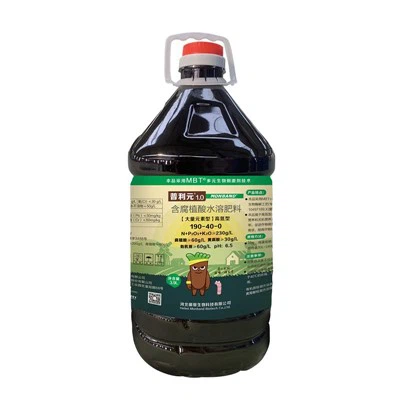
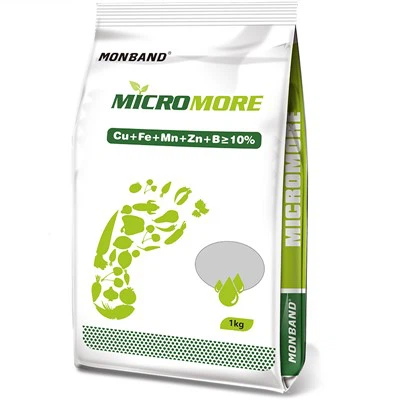
Hey there! I'm a supplier of biostimulant fertilizers, and today I'm super excited to chat about how these amazing products work in wetland soils. Wetlands are unique ecosystems, and understanding how biostimulant fertilizers interact with them can be a game - changer for both environmental health and agricultural productivity.


First off, let's get a quick idea about what wetland soils are like. Wetland soils are often water - saturated for long periods. This waterlogging creates an anaerobic environment, which means there's very little oxygen available. As a result, the normal processes of nutrient cycling and plant growth that we see in well - drained soils are quite different here. The lack of oxygen affects the activity of soil microorganisms, the availability of nutrients, and the overall health of plants growing in these areas.
So, how do biostimulant fertilizers come into play? Biostimulant fertilizers are substances that, when applied to plants or the soil, can enhance plant growth, improve nutrient uptake, and increase the plant's tolerance to stress. There are different types of biostimulants, and two of the most common ones are Humic Based Biostimulants and Microbial Biostimulants.
Let's start with humic based biostimulants. Humic substances are a natural part of the soil organic matter. They're formed from the decomposition of plant and animal residues over a long time. In wetland soils, humic based biostimulants can work wonders.
One of the key functions of humic substances is their ability to improve soil structure. In wetland soils, the waterlogging can cause the soil particles to stick together, reducing the pore space. This makes it difficult for plant roots to penetrate and for oxygen to enter the soil. Humic based biostimulants act like a glue that holds the soil particles in a more porous structure. They form aggregates, which create channels for air and water movement. This means that even in water - saturated conditions, the roots can still get some oxygen, and excess water can drain away more easily.
Another important role of humic substances is their effect on nutrient availability. In wetland soils, many nutrients can become locked up or unavailable to plants. For example, iron and manganese can form insoluble compounds in the anaerobic conditions. Humic substances have a high cation exchange capacity (CEC). This means they can attract and hold onto positively charged nutrient ions like potassium, calcium, and magnesium. When plants need these nutrients, the humic substances can release them in a form that the plants can absorb. So, in a way, humic based biostimulants act as a nutrient reservoir in wetland soils.
They also have a positive impact on plant root development. Humic substances can stimulate the growth of root hairs. Root hairs are tiny extensions of the roots that increase the surface area for nutrient and water absorption. In wetland soils, where the nutrient availability is often limited, having a well - developed root system with lots of root hairs is crucial for plants to survive and thrive.
Now, let's talk about microbial biostimulants. Microbes are everywhere in the soil, and in wetland soils, they play a vital role in the ecosystem. Microbial biostimulants contain beneficial microorganisms such as bacteria, fungi, and yeasts.
One of the main advantages of using microbial biostimulants in wetland soils is their ability to fix nitrogen. Nitrogen is an essential nutrient for plant growth, but in wetland soils, the nitrogen cycle can be disrupted. Some bacteria in microbial biostimulants can convert atmospheric nitrogen into a form that plants can use. This is especially important in wetland areas where the natural nitrogen fixation processes might be limited due to the anaerobic conditions.
Microbes in these biostimulants can also help in breaking down organic matter. In wetland soils, there's often a lot of organic material that accumulates. Microbial biostimulants can speed up the decomposition process, releasing nutrients back into the soil. This not only makes the nutrients available to plants but also helps in reducing the build - up of organic matter, which can sometimes lead to problems like waterlogging and the growth of harmful pathogens.
Moreover, certain microbes can form symbiotic relationships with plant roots. For example, mycorrhizal fungi can form a network around the roots, extending the root system's reach. This allows plants to access nutrients and water from a larger volume of soil. In wetland soils, where the nutrient and water distribution can be uneven, this symbiotic relationship can give plants a significant advantage.
Microbial biostimulants can also enhance the plant's resistance to diseases. Some of the beneficial bacteria and fungi produce antibiotics and other compounds that can inhibit the growth of harmful pathogens. In wetland soils, where the high moisture levels can create a favorable environment for disease - causing organisms, having this extra layer of protection can be a lifesaver for plants.
But how do these biostimulant fertilizers actually get to work in the wetland soil? Well, when we apply biostimulant fertilizers to wetland soils, the first thing that happens is that the active ingredients start to interact with the soil environment.
For humic based biostimulants, once they're in the soil, they start to bind with the soil particles. They form complexes with the minerals and organic matter in the soil, gradually changing the soil structure and improving the pore space. The humic substances also start to attract and hold onto nutrients, making them more available to plants.
Microbial biostimulants, on the other hand, need to establish themselves in the soil. The beneficial microorganisms need to find a suitable niche in the wetland soil ecosystem. They start to multiply and interact with the existing soil microbes. Some of them will form symbiotic relationships with plant roots, while others will start to break down organic matter and fix nitrogen.
It's important to note that the effectiveness of biostimulant fertilizers in wetland soils can be influenced by several factors. The type of wetland, the water regime, the existing soil chemistry, and the plant species all play a role. For example, in a freshwater wetland, the nutrient requirements and soil conditions might be different from those in a saltwater wetland.
In addition, the application method and rate of biostimulant fertilizers are also crucial. If we apply too little, the effects might not be noticeable. But if we apply too much, it could potentially disrupt the natural balance of the wetland ecosystem. So, it's always a good idea to do some soil testing and consult with experts before applying biostimulant fertilizers in wetland areas.
In conclusion, biostimulant fertilizers can have a significant positive impact on wetland soils. They can improve soil structure, enhance nutrient availability, promote plant growth, and increase the plant's resistance to stress and diseases. Whether it's humic based biostimulants or microbial biostimulants, these products offer a sustainable way to manage wetland ecosystems and improve agricultural productivity in wetland - adjacent areas.
If you're interested in learning more about our biostimulant fertilizers and how they can work in your specific wetland soil conditions, I'd love to have a chat with you. Let's start a conversation about how we can work together to make your wetland areas healthier and more productive. Contact us to start the procurement process and let's explore the possibilities!
References
- Brady, N. C., & Weil, R. R. (2008). The nature and properties of soils. Pearson Prentice Hall.
- Metting, F. B. (1993). The rhizosphere and plant growth. Kluwer Academic Publishers.
- Stevenson, F. J. (1994). Humus chemistry: genesis, composition, reactions. Wiley - Interscience.