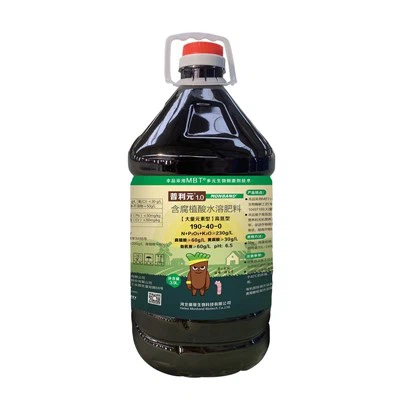
As a supplier of Bio Humic Fertilizer, I've often been asked whether this type of fertilizer can be effectively used in orchard management. In this blog, I'll delve into the science behind Bio Humic Fertilizer and explore its suitability for orchards.
Understanding Bio Humic Fertilizer
Bio Humic Fertilizer is a product that combines the benefits of humic substances with biological components. Humic substances are formed through the decomposition of organic matter over long periods. They are rich in carbon and contain a variety of functional groups such as carboxyl, phenolic, and hydroxyl groups. These functional groups give humic substances unique chemical and physical properties, making them highly reactive in the soil environment.
The biological components in Bio Humic Fertilizer usually include beneficial microorganisms such as bacteria, fungi, and actinomycetes. These microorganisms play crucial roles in soil health and plant growth. For example, some bacteria can fix atmospheric nitrogen, making it available for plants. Fungi can form symbiotic relationships with plant roots, enhancing nutrient uptake and improving plant resistance to diseases.
Benefits of Bio Humic Fertilizer in Orchard Management
1. Soil Improvement
One of the primary advantages of using Bio Humic Fertilizer in orchards is its ability to improve soil structure. Humic substances can bind soil particles together, creating aggregates. These aggregates improve soil porosity, allowing better air and water infiltration. This is particularly important in orchards, as tree roots need oxygen to function properly. Improved soil structure also reduces soil compaction, which can restrict root growth.
Moreover, Bio Humic Fertilizer can increase the cation exchange capacity (CEC) of the soil. CEC is a measure of the soil's ability to hold and exchange nutrients. A higher CEC means that the soil can retain more nutrients, such as potassium, calcium, and magnesium, making them available to the orchard trees over a longer period.
2. Nutrient Availability
Bio Humic Fertilizer can enhance the availability of nutrients in the soil. Humic substances can chelate or complex with metal ions, preventing them from being fixed in the soil and making them more accessible to plants. For example, iron is often present in the soil in an insoluble form, but humic substances can solubilize iron, allowing it to be taken up by the orchard trees.
The beneficial microorganisms in Bio Humic Fertilizer also contribute to nutrient availability. They can break down organic matter in the soil, releasing nutrients such as nitrogen, phosphorus, and sulfur. Some microorganisms can also solubilize phosphorus from insoluble forms, making it available for plant uptake.
3. Plant Growth Promotion
The application of Bio Humic Fertilizer can stimulate plant growth in orchards. Humic substances can promote root development by increasing the number and length of root hairs. This leads to a larger root surface area, which in turn improves the plant's ability to absorb water and nutrients.
In addition, Bio Humic Fertilizer can enhance the photosynthetic efficiency of orchard trees. It can increase the chlorophyll content in leaves, allowing the trees to capture more sunlight and produce more energy. This results in better growth, higher fruit yields, and improved fruit quality.
4. Disease Resistance
The beneficial microorganisms in Bio Humic Fertilizer can help protect orchard trees from diseases. Some bacteria and fungi can produce antibiotics or other bioactive compounds that inhibit the growth of pathogenic microorganisms. They can also compete with pathogens for nutrients and space, reducing their ability to infect the trees.
Humic substances can also enhance the plant's immune system. They can induce the production of defense-related proteins in plants, making them more resistant to diseases.
Application of Bio Humic Fertilizer in Orchards
1. Pre - Planting Application
Before planting new orchard trees, Bio Humic Fertilizer can be incorporated into the soil. This helps to improve the soil conditions and provides a good start for the young trees. The recommended application rate may vary depending on the soil type and the specific requirements of the orchard. Generally, a rate of 200 - 500 kg per hectare can be used.
2. Foliar Application
Foliar application of Bio Humic Fertilizer can be an effective way to provide nutrients directly to the leaves of orchard trees. This method is particularly useful during the critical growth stages, such as flowering and fruit set. A diluted solution of Bio Humic Fertilizer can be sprayed on the leaves using a sprayer. It is important to ensure that the leaves are thoroughly covered, but avoid spraying during hot and sunny days to prevent leaf burn.
3. Drip Irrigation
In orchards with drip irrigation systems, Bio Humic Fertilizer can be applied through the irrigation water. This allows for a more precise and uniform distribution of the fertilizer in the root zone. The fertilizer can be dissolved in a tank and then injected into the irrigation system at a controlled rate.
Case Studies
There have been several case studies demonstrating the positive effects of Bio Humic Fertilizer in orchard management. In a study conducted on apple orchards, the application of Bio Humic Fertilizer increased the fruit yield by 15 - 20% compared to the control group. The fruits also had better color, flavor, and shelf - life.
In a citrus orchard, the use of Bio Humic Fertilizer improved the soil fertility and reduced the incidence of root diseases. The trees showed better growth and produced higher - quality fruits.
Potential Challenges and Solutions
While Bio Humic Fertilizer offers many benefits, there are also some potential challenges in its application. One challenge is the quality control of the product. Since Bio Humic Fertilizer contains biological components, the viability and activity of the microorganisms can be affected by factors such as storage conditions and handling. To overcome this, it is important to choose a reliable supplier and follow the recommended storage and handling instructions.


Another challenge is the compatibility with other fertilizers and pesticides. Some chemicals may be harmful to the beneficial microorganisms in Bio Humic Fertilizer. Therefore, it is necessary to test the compatibility before mixing Bio Humic Fertilizer with other products.
Conclusion
In conclusion, Bio Humic Fertilizer can be a valuable tool in orchard management. It offers multiple benefits, including soil improvement, enhanced nutrient availability, plant growth promotion, and disease resistance. Whether you are growing apples, oranges, or other fruits, the application of Bio Humic Fertilizer can help you achieve better yields and higher - quality fruits.
As a supplier of Bio Humic Fertilizer, I am committed to providing high - quality products and professional technical support. If you are interested in using our Humic Acid Liquid Fertilizer, Humic Acid Organic Fertilizer, or Humic Organic Fertilizer in your orchard, please feel free to contact me for more information and to discuss your specific needs. We can work together to develop a customized fertilization plan for your orchard.
References
- Chen, Y., & Aviad, T. (1990). The influence of humic substances on plant growth. In Soil organic matter and biological activity (pp. 309 - 326). Springer, Dordrecht.
- Kloepper, J. W., & Schroth, M. N. (1978). Plant growth - promoting rhizobacteria on radishes. Phytopathology, 68(11), 1377 - 1381.
- Zhang, R., & Kong, X. (2014). Effects of humic acid on soil properties and plant growth. Journal of Integrative Agriculture, 13(10), 2063 - 2071.