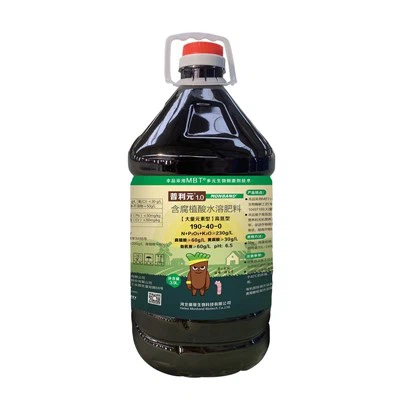
Soil compaction is a widespread issue in agriculture, characterized by the compression of soil particles, which leads to reduced pore space, limited water infiltration, and poor root penetration. This can significantly hamper crop growth and overall soil health. As a supplier of Fertilizer with Humic Acid, I am excited to delve into how our product can play a crucial role in reducing soil compaction.


Understanding Soil Compaction
Before we explore the solution, it's essential to understand the problem. Soil compaction occurs due to various factors, including heavy machinery use, excessive tillage, and high - traffic areas. When soil is compacted, the spaces between soil particles shrink. These spaces are vital as they allow for the movement of air, water, and nutrients. With reduced pore space, water cannot infiltrate the soil easily, leading to surface runoff and erosion. Roots also struggle to penetrate the compacted soil, which restricts the plant's access to water and nutrients, ultimately stunting growth.
The Role of Humic Acid in Soil Structure
Humic acid is an organic compound that is a key component of our Fertilizer with Humic Acid. It is derived from the decomposition of organic matter, such as plant and animal residues. Humic acid has unique chemical and physical properties that make it highly effective in improving soil structure.
One of the primary ways humic acid helps reduce soil compaction is by acting as a soil aggregator. Soil aggregates are groups of soil particles that are bound together. Humic acid contains functional groups, such as carboxyl and phenolic groups, which can form bridges between soil particles. These bridges help to bind individual soil particles into larger aggregates. As a result, the soil becomes more porous, with increased pore space.
The increased pore space has several benefits. Firstly, it improves water infiltration. Water can more easily penetrate the soil, reducing surface runoff and the risk of erosion. Secondly, it enhances aeration. Oxygen can reach the roots more effectively, which is essential for root respiration. Adequate root respiration is necessary for the plant to take up nutrients and water efficiently.
Humic Acid and Cation Exchange Capacity (CEC)
Another important aspect of humic acid's role in reducing soil compaction is its effect on the cation exchange capacity (CEC) of the soil. CEC is a measure of the soil's ability to hold and exchange positively charged ions (cations), such as calcium (Ca²⁺), magnesium (Mg²⁺), and potassium (K⁺).
Humic acid has a high CEC. When added to the soil, it can attract and hold cations. This is particularly important for soil structure because calcium ions, in particular, play a crucial role in soil aggregation. Calcium ions can form cross - links between soil particles and humic acid, further stabilizing the soil aggregates.
By increasing the CEC of the soil, humic acid also helps to improve the availability of nutrients to plants. The cations held by humic acid are more easily accessible to plant roots, which means that plants can take up nutrients more efficiently. This leads to healthier plants with stronger root systems, which can further help to break up compacted soil over time.
Humic Acid and Biological Activity in the Soil
Soil is a living ecosystem, and the presence of beneficial microorganisms is essential for soil health. Humic acid acts as a food source and a habitat for these microorganisms. When our Fertilizer with Humic Acid is added to the soil, it stimulates the growth and activity of beneficial bacteria, fungi, and earthworms.
Earthworms, in particular, play a crucial role in reducing soil compaction. They burrow through the soil, creating channels that allow for better water and air movement. These channels also provide pathways for plant roots to grow deeper into the soil. Additionally, earthworms consume organic matter and excrete it in a form that further enriches the soil and improves its structure.
Beneficial bacteria and fungi also help to break down organic matter in the soil, releasing nutrients in the process. They can also produce substances that help to bind soil particles together, contributing to the formation of soil aggregates.
Our Product Range
As a supplier of Fertilizer with Humic Acid, we offer a diverse range of products to meet the different needs of farmers and gardeners.
Our Humic Organic Fertilizer is a granular product that is rich in humic acid and other organic matter. It can be easily incorporated into the soil during tillage or applied as a top - dressing. This fertilizer provides a slow - release source of nutrients and helps to improve soil structure over the long term.
For those who prefer a more convenient application method, our Liquid Humic Acid Organic Fertilizer is an excellent choice. It can be applied through irrigation systems, making it easy to distribute evenly across the field. This liquid fertilizer is quickly absorbed by the soil and plants, providing an immediate boost to soil health.
Our Humic Liquid Fertilizer is another popular option. It is highly concentrated and can be used for foliar application as well as soil drenching. Foliar application allows the plants to absorb nutrients directly through their leaves, while soil drenching helps to improve soil structure and fertility.
The Long - Term Benefits of Using Fertilizer with Humic Acid
Using our Fertilizer with Humic Acid not only helps to reduce soil compaction in the short term but also offers long - term benefits for soil health and crop production.
Over time, the repeated use of humic acid - based fertilizers can lead to a significant improvement in soil structure. The soil becomes more friable, making it easier to till and work with. This reduces the need for heavy machinery, which in turn helps to prevent further soil compaction.
Improved soil structure also leads to better water - holding capacity. The soil can retain more water during dry periods, reducing the need for frequent irrigation. This is not only beneficial for water conservation but also helps to ensure that plants have a consistent supply of water.
In addition, the healthier soil environment created by humic acid promotes the growth of a diverse range of beneficial microorganisms. These microorganisms can help to suppress soil - borne diseases and pests, reducing the need for chemical pesticides.
Contact Us for Purchase and Consultation
If you are interested in learning more about how our Fertilizer with Humic Acid can help you reduce soil compaction and improve your soil health, we encourage you to contact us. Our team of experts is ready to provide you with detailed information about our products, offer customized solutions based on your specific soil and crop requirements, and assist you in making an informed purchasing decision. Whether you are a large - scale farmer, a small - scale gardener, or a landscaping professional, we have the right product for you.
References
Brady, N. C., & Weil, R. R. (2008). The nature and properties of soils. Pearson Prentice Hall.
Lal, R., & Shukla, M. K. (Eds.). (2004). Soil management: Principles and applications. CRC Press.
Stevenson, F. J. (1994). Humus chemistry: Genesis, composition, reactions. Wiley.